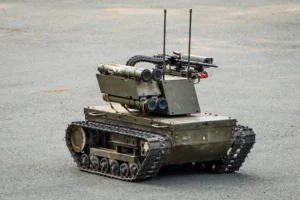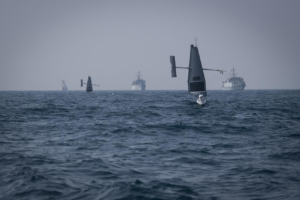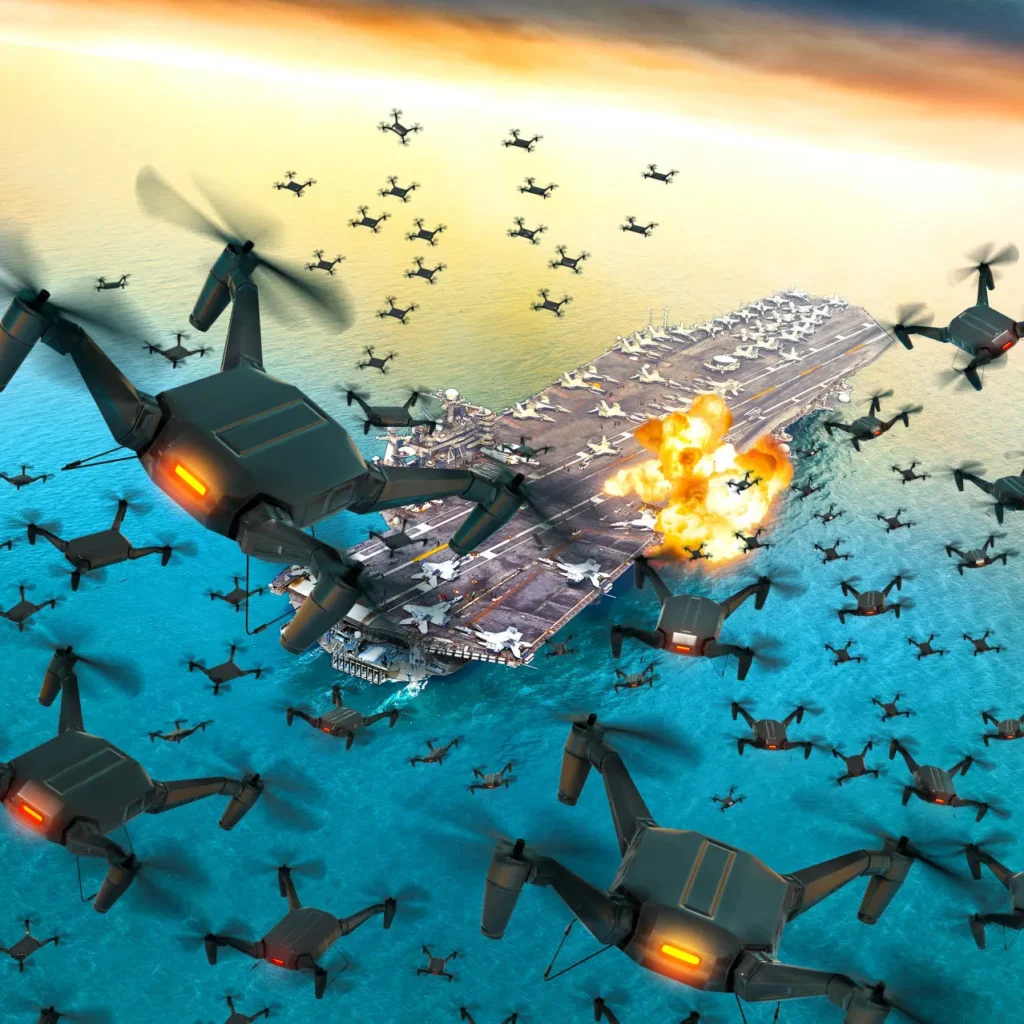
The geopolitical calculus of global sea power has shifted dramatically. Historically, naval superiority was calculated by counting capital ships, missile silos, and nuclear carriers. However, naval warfare in 2026 is defined by a fundamental doctrine shift. Today, asymmetric, software-driven autonomous networks are neutralizing multi-billion-dollar legacy platforms.
For example, recent conflicts in the Black Sea and Red Sea demonstrated how low-cost sea drones can deny maritime access. Consequently, modern defense planners no longer view uncrewed systems as mere experimental add-ons. Instead, heterogeneous unmanned fleets, edge-computed AI kill webs, and subsea infrastructure defense form the operational backbone of modern naval power projection.
The Strategic Shift: From Platform-Centric Fleets to Software-Defined Navies
For over a century, navies measured power by physical displacement. However, modern anti-access/area-denial (A2/AD) capabilities have rendered large, concentrated fleet formations highly vulnerable.
In addition, the economic equation of modern naval engagement has changed. For instance, launching a $2 million interceptor missile to destroy a $20,000 drone quickly exhausts defense stockpiles. Therefore, military research now emphasizes software-defined, data-intensive, and cyber-resilient architectures.
Specifically, modern naval effectiveness relies on six primary operational capabilities:
- AI at the Edge: Tactical algorithms run directly on shipboard systems. As a result, targeting decisions occur in seconds.
- Cloud-Enabled Battle Management: Operational data spreads across allied task forces seamlessly in real time.
- Manned-Unmanned Teaming (MUM-T): Uncrewed platforms integrate directly into carrier strike groups.
- Autonomous Payload Delivery: Uncrewed vessels carry strike, surveillance, and electronic warfare assets forward.
- Multi-Domain Data Fusion: Sensor systems merge orbital, aerial, surface, and subsea inputs into one picture.
- Zero-Trust Cyber Resilience: Software networks actively isolate and contain cyber attacks during combat.
Architectural Comparison: Legacy vs. 2026 Naval Paradigms
| Operational Vector | Legacy Platform-Centric Fleet | 2026 Software-Defined Hybrid Navy |
| Force Distribution | Concentrated around Carrier Strike Groups | Mass-distributed across uncrewed nodes |
| Command Architecture | Hierarchical command via satellite links | Mesh-networked, Zero-Trust edge nodes |
| Targeting Paradigm | Centralized shipboard combat control systems | Distributed kill webs with AI target matching |
| Logistics Model | Dedicated underway replenishment vessels | Autonomous low-signature cargo USVs |
| Sensor Resilience | Hull damage disables single-point radar | Dispersed attritable sensors maintain continuous coverage |
Autonomous Systems (USVs & UUVs): Scaling Force Multipliers
Initially, uncrewed systems were limited to basic surveillance missions. However, in 2026, autonomous surface and subsurface craft serve as vital force multipliers. These programs are powered by initiatives like the Pentagon's Replicator Initiative and lessons from U.S. 5th Fleet's Task Force 59.
Navies now group these assets into distinct operational roles:
Unmanned Surface Vehicles (USVs)
- Medium USVs (MUSVs): These vessels act as electronic intelligence pickets. In fact, they operate up to 50 miles ahead of surface strike groups to draw adversary radar fire.
- Low-Cost Attritable USVs: Small, low-profile vessels deploy in large swarms. Consequently, they can overwhelm adversary ship defenses in contested littoral zones.
Unmanned Underwater Vehicles (UUVs)
- Extra-Large UUVs (e.g., Boeing Orca XLUUV): These autonomous submarines operate independently for months. Furthermore, they perform covert mine-laying and seabed cable patrols without risking crew lives.
- Micro-UUV Arrays: Deployed via torpedo tubes, these small craft form acoustic sonar networks. Thus, they track quiet diesel-electric submarines effectively.
AI-Powered Maritime Domain Awareness (MDA)
Sorting through massive ocean telemetry presents a serious operational challenge. Fortunately, modern Maritime Domain Awareness (MDA) relies on edge-processed machine learning models. These systems quickly aggregate data from multiple intelligence sources:
- Synthetic Aperture Radar (SAR) Satellites: Orbital SAR radar pierces cloud cover to locate non-broadcasting dark ships.
- Automatic Identification System (AIS) Feeds: Machine learning tools track global commercial shipping routes continuously.
- Electro-Optical/Infrared (EO/IR) Cameras: Drones use computer vision to classify vessel threat levels in high seas.
- Signals Intelligence (SIGINT): Automated systems map electromagnetic emissions from foreign radars instantly.
As a result, command systems filter out false targets automatically. Therefore, commanders receive clear operational options before crises escalate.
Undersea Warfare: Protecting Critical Seabed Infrastructure
While surface combatants generate headlines, the seabed represents a critical strategic domain. In fact, over 95% of international internet traffic passes through subsea fiber-optic cables. Protecting this infrastructure has become an urgent naval priority.
To secure these ocean assets, modern defense forces rely on targeted undersea strategies:- Deep-Sea Robotic Intervention: UUVs equipped with articulated arms inspect and repair subsea cables at depths below 3,000 meters.
- Distributed Seabed Sensors: Self-powered underwater sensors detect suspicious submergence vehicles around energy pipelines.
- Passive Sonar Nets: Subsurface autonomous networks map submarine movements silently without revealing their own positions.
Cyber Resilience: Securing Networked Warships
Modern warships operate as flying nodes within broad defense networks. Consequently, software vulnerabilities pose risks just as severe as incoming anti-ship missiles. Adversaries frequently employ electronic jamming, satellite interference, and malware exploits.
To counter these threat vectors, modern navies implement robust defenses:
- Assured PNT (Positioning, Navigation, and Timing): When GPS signals are jammed, ships use optical star-trackers and AI land-imaging units to navigate accurately.
- Zero-Trust Network Architecture: Ship systems are strictly segmented. As a result, a breach in administrative software cannot spill into missile control systems.
- Cognitive Electronic Warfare: AI algorithms analyze foreign radar signals in real time. Subsequently, they generate custom jamming signals within milliseconds.
The Future: Distributed Maritime Operations (DMO)
Looking ahead to 2030, the primary operational doctrine for global navies is Distributed Maritime Operations (DMO). Instead of concentrating power on a single carrier, DMO disperses strike and sensor nodes across vast ocean spaces.
This doctrine relies on three core operational pillars:
- Dispersed Launch Platforms: Small, uncrewed barges carry missile launchers into forward positions safely.
- Mesh Communication Relays: Tethered airborne drones maintain data links when satellite communications are degraded.
- Manned-Unmanned Teaming Nodes: Human crews focus entirely on high-level command decisions, while autonomous craft conduct dangerous sensor sweeps.
Ultimately, the navies that master this integration of AI software, subsea defense, and autonomous platforms will command the oceans in the decade ahead.
Read Related Article
Explore More