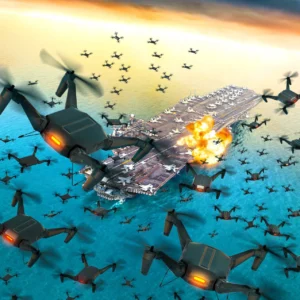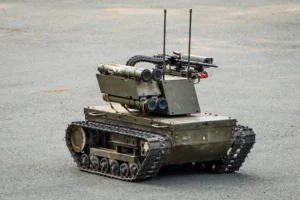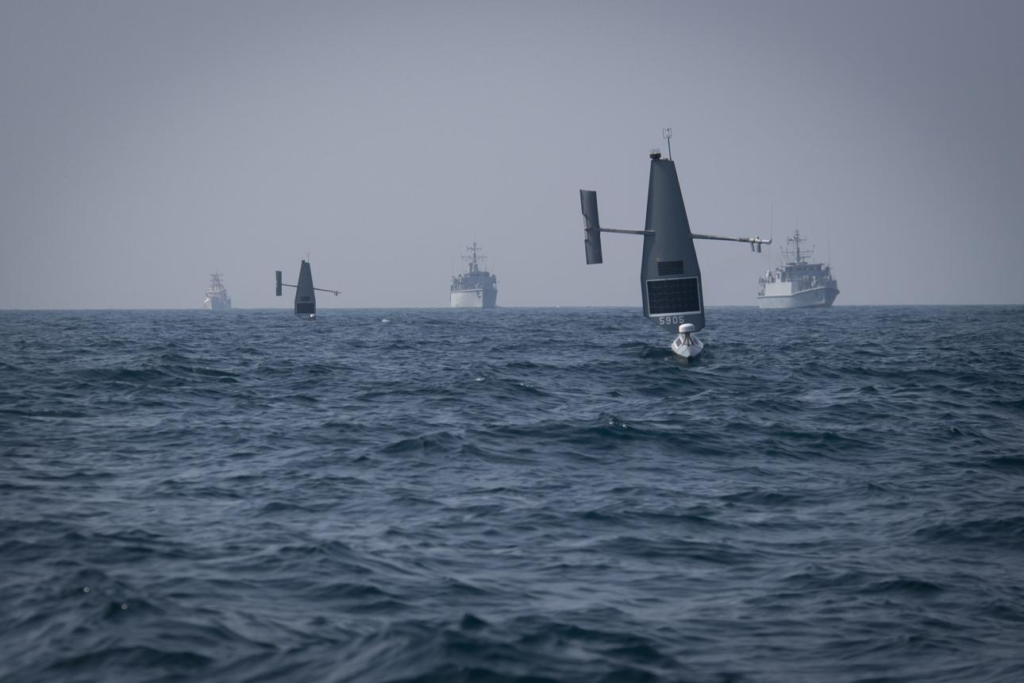
The future of naval warfare is no longer shaped solely by aircraft carriers, destroyers, or submarines. Sea drones in naval warfare have emerged as one of the most disruptive military technologies of the 21st century, and recent conflicts prove it. Autonomous maritime systems are no longer experimental — they're operational assets already changing how nations project power, gather intelligence, and deter adversaries.
The reported use of unmanned surface vessels (USVs) by the United States against Iran highlighted this shift. Combined with lessons from the Black Sea, Red Sea, and Indo-Pacific, one thing is clear: naval warfare is entering an era where autonomous systems complement — and in some cases replace — traditional manned platforms.
In this article, you'll learn:
- How sea drones are transforming naval strategy and doctrine
- What the U.S.-Iran confrontation revealed about USV combat effectiveness
- Which countries are racing to build autonomous naval fleets
- Why sea drones are reshaping the economics of naval warfare
- The AI, security, and governance challenges ahead
What Are Sea Drones? A Quick Definition
Sea drones — also called unmanned surface vessels (USVs) or unmanned maritime systems (UMS) — are remotely operated or autonomous watercraft used for military and commercial missions. In naval warfare, they perform reconnaissance, mine countermeasures, electronic warfare, logistics, and strike operations, often without a single sailor on board.
1. Sea Drones Are Transforming Military Strategy
For decades, naval strategy revolved around deploying large, heavily armed warships to establish sea control and project power. That paradigm is evolving fast.
Modern USVs can perform:
- Intelligence, surveillance, and reconnaissance (ISR)
- Electronic warfare
- Mine countermeasures
- Logistics support
- Precision strike missions
All without putting sailors in direct danger. Unlike conventional ships, sea drones can remain at sea for extended periods with far lower logistical and operational costs.
This shift reflects a broader move toward distributed maritime operations, where networks of connected autonomous systems share data and execute missions collaboratively. Rather than replacing traditional fleets, sea drones in naval warfare act as force multipliers — extending operational reach and improving situational awareness for the ships and sailors already at sea.
2. The U.S.-Iran Conflict Signals a Turning Point
The reported deployment of armed USVs during the U.S.-Iran confrontation marks a significant milestone for autonomous naval operations.
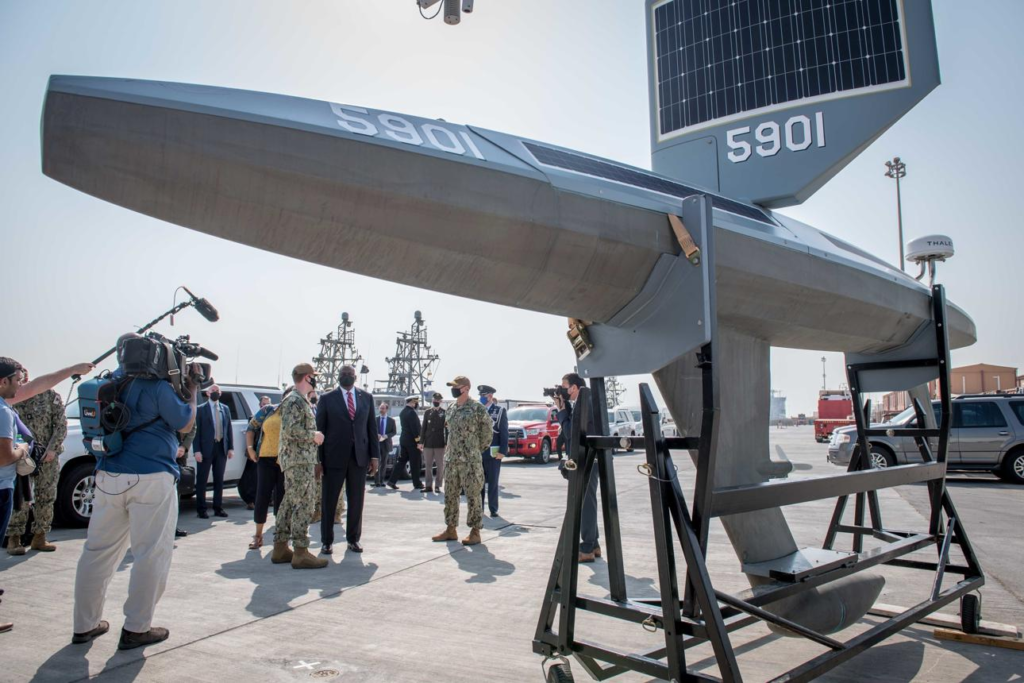
The Persian Gulf presents unique operational challenges: narrow waterways, dense commercial shipping, asymmetric threats, and anti-access/area-denial (A2/AD) capabilities. In this environment, autonomous surface vessels offer clear advantages:
- Persistent maritime surveillance
- Real-time intelligence collection
- Reduced risk to personnel
- Rapid target identification
- Cost-effective force projection
- Continuous presence in contested waters
Instead of risking billion-dollar warships on high-threat missions, commanders can deploy comparatively inexpensive autonomous vessels for reconnaissance, monitoring, and strike support. The operational lessons from this confrontation are already influencing naval modernization programs worldwide.
3. Global Naval Competition Is Driving Innovation
The United States isn't alone in recognizing the strategic value of autonomous maritime systems.
- China is rapidly expanding unmanned maritime capabilities as part of its broader naval modernization push.
- Russia continues testing autonomous underwater and surface systems.
- The UK, Australia, Japan, Türkiye, and several NATO members are investing heavily in next-generation maritime drones.
This global race reflects a shared realization: future naval superiority won't come from having the biggest fleet — it will come from integrating autonomous technology into network-centric warfare. In the Indo-Pacific especially, sea drones in naval warfare are expected to play a pivotal role in intelligence gathering, anti-submarine warfare, coastal defense, and contested sea control.
4. Sea Drones Are Changing the Economics of Naval Warfare
Perhaps the most revolutionary aspect of autonomous maritime systems is their affordability.
Modern destroyers, frigates, and aircraft carriers require enormous financial investment, extensive maintenance, and thousands of personnel. Losing a single capital ship carries massive operational, political, and economic consequences. Autonomous surface vessels, by contrast, are relatively inexpensive to build and operate — creating a favorable cost asymmetry.
A low-cost sea drone can conduct surveillance, disrupt maritime traffic, run electronic warfare missions, or support precision targeting against assets worth exponentially more. For both advanced and middle-income naval powers, investing in sea drones offers a way to increase capability without proportionally increasing defense spending.
5. Artificial Intelligence Is Accelerating Maritime Autonomy
AI is quickly becoming the backbone of autonomous naval operations. Modern sea drones increasingly rely on AI for:
- Autonomous navigation
- Collision avoidance
- Target recognition
- Route optimization
- Swarm coordination
- Real-time decision support
Future fleets will likely combine networks of autonomous vessels with crewed ships, submarines, satellites, and aircraft — improving efficiency and resilience against electronic warfare and contested communications.
But greater autonomy raises real ethical and legal questions. Who is accountable when an autonomous system makes a lethal decision? What counts as "meaningful human control"? These questions remain unresolved, and international governance needs to keep pace with the technology.
6. New Security Challenges Demand New Solutions
The rapid proliferation of autonomous maritime systems creates new vulnerabilities. Critical maritime infrastructure — commercial ports, offshore energy installations, undersea communication cables, and global shipping lanes — may become increasingly exposed to autonomous attacks.
In response, navies are investing in counter-USV capabilities that combine radar, AI, electronic warfare, cyber defense, and directed-energy weapons. Future naval superiority won't just depend on deploying autonomous systems — it will depend on effectively defending against them. The contest between sea drones and counter-drone technology is shaping up to be one of the defining features of maritime warfare in the decades ahead.
7. The Strategic Implications Extend Beyond Major Powers
Sea drones in naval warfare aren't just a great-power story. In South Asia, naval modernization is accelerating alongside intensifying strategic competition across the Indian Ocean Region. India has expanded investment in autonomous maritime platforms, while Pakistan has shown growing interest in maritime domain awareness and unmanned capabilities.
Smaller maritime nations are also starting to view autonomous systems as affordable force multipliers for coastal surveillance and maritime security. But wider proliferation raises real concerns about accidental escalation, autonomous decision-making, and the absence of internationally accepted rules governing military use of sea drones — making confidence-building measures and communication mechanisms increasingly important for regional stability.
The Need for International Maritime Governance
Technological innovation has outpaced international regulation. Unlike nuclear, chemical, or biological weapons, there's currently no comprehensive international framework specifically governing autonomous maritime systems.
Existing international humanitarian law still applies, but practical questions around autonomous targeting, accountability, operational transparency, and escalation management remain largely unresolved. Governments should work toward international standards addressing responsible military use, autonomous decision-making, maritime safety, and crisis communication — without them, misunderstandings involving autonomous vessels in contested waters could significantly raise geopolitical risk.
Conclusion
The emergence of sea drones in naval warfare marks one of the most important shifts in military affairs since the introduction of precision-guided weapons. The lessons from the U.S.-Iran confrontation show that autonomous surface vessels are no longer experimental — they're becoming central to modern naval strategy.
Their affordability, persistence, scalability, and integration with artificial intelligence make them attractive to major powers and regional navies alike. At the same time, their proliferation raises strategic, legal, and ethical questions that demand serious policy attention.
The future of maritime security won't be determined solely by carrier and submarine counts. It will depend on how effectively states integrate autonomous systems into naval doctrine, build robust counter-drone capabilities, and establish international norms that reduce the risk of unintended escalation. The age of autonomous naval warfare has arrived — the question now is whether military strategy, international law, and political leadership can keep pace.
Frequently Asked Questions
What are sea drones used for in naval warfare?
Sea drones perform surveillance, reconnaissance, mine countermeasures, electronic warfare, logistics support, and precision strike missions — often at lower cost and risk than crewed vessels.
Which countries are leading in sea drone technology?
The United States, China, Russia, the UK, Australia, Japan, and Türkiye are among the countries investing most heavily in unmanned surface vessel programs.
Are sea drones replacing traditional warships?
Not entirely. Most naval strategists see sea drones as force multipliers that extend the reach and situational awareness of traditional fleets rather than outright replacements.
What are the risks of autonomous naval weapons?
Key risks include accidental escalation, unclear accountability for autonomous decisions, vulnerability of critical maritime infrastructure, and the absence of international legal frameworks governing their use.
Read More on Drones & Unmanned Systems